Monday, January 31, 2011

What's the State of Your Union?


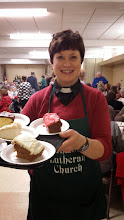
This past Sunday I was at Shepherd Of The Hills Lutheran a mission development church is Western Maryland to preach and provide a presentation on the world of Corinth in the time of Paul after my trip to Greece and Turkey- here is the sermon.

Grace and peace to you, my sisters and brothers in Christ in the name of the Triune + God. It’s a blessing to be with you this day. As you’ve heard, I’m a senior at Gettysburg Seminary, recently returned from 15 days in Greece and Turkey where I visited sites connected with the churches of Revelation and part of Paul’s missionary journeys. It seemed like an easy decision to commit to preaching on Paul’s first letter to the Corinthians- but of course there’s much Paul says that is more about challenge than about “wow it sure is great to see you!” We hear that the cross brings redemption, but are also reminded that we’re not called to pick up our old life but embrace a new one even though it seems foolish. Words for Corinth and for us.
I’m still trying to grasp that ten days ago I was literally walking the same streets and places where Paul is said to have appeared before Gallio, the governor, in Acts. Seeing the agora, the marketplace where Paul would’ve lived and worked with Priscilla and Aquila. Trying to imagine the former glory, while seeing it today in ruins, hearing little bits of terracotta from another age, crunch beneath my feet. Knowing Corinth was destroyed within a hundred years of Paul’s time there, and is now just a sleepy remnant of its former self. I’m sure no one then believed that possible amidst so much wealth and power and wisdom.

Corinth had just been rebuilt in the time of Paul. Corinth’s location on a strip of land offered not one, but two seaports-greater trade possibilities and strategic location. They hosted the Isthmian Games- kind of like the Olympics where thousands of people flocked bringing lots of tourist money. Imagine a city of brand new gleaming marble buildings and bronze statues. Corinth had developed a special way of crafting bronze producing a pinkish-gold metal that became a collector’s item. They were rolling in money. And to top it off, the philosopher Diogenes had come there seeking a larger audience for ideas, to create an intellectual center as well. Emperor Augustus launched a massive building campaign, with lots of investment to create a city to envy, offering land to soldiers and others. Offering those with no chance of upper class status the ability to become “self-made men.” This is what is challenging for those early Christians- who wouldn’t want a better life? It must have been almost overwhelming to be there in that time swimming in all that
prosperity.

If you were the right person. But the good life wasn’t for all, and not for tradesmen, like Paul- with a government imposed seven day work week- think about how to fit in worship much less relaxation. In a world with thousands of people per acre, with a raucous lifestyle perpetuated by the sailors and others. It may have been the first “city that never sleeps.” Many lived in extreme poverty, the kind we see in global slums and our inner cities today. How hard it would be not to do what it took to get ahead. These are the people to whom Paul said, “not many of you were wise by human standards, powerful, or of noble birth.” And while Paul’s trade allowed him a steady stream of conversation partners in the marketplace, tradesmen by their very occupation were reviled, the bottom of the food chain. It would be foolishness indeed that a church would be started by an upstart tradesman causing trouble in the name of a man who had been killed in the most degrading way. A newcomer who had the nerve to mock the higher ups in every way with “Where is the one who is wise? Where is the expert? Where is the debater of this age?”

But we in the here and now can still ask these questions and still hear that the message of Christianity is such foolishness to a status-driven, techno-savvy 24/7 world. Each year in this country, our elected leaders gather for the State of the Union address which happened again a few days ago. An occasion for leaders to boast about how our wisdom, power and strength will be our salvation. What if we as Christians pondered the state of our union- our union with the Christ of the cross? What would we find?

Our lessons in the season of Epiphany serve to reveal, to make known to us something of the nature of God in Christ Jesus, and of what it means to be in union with this Christ. Paul’s words today remind us again that no matter what the world suggests, the things generations prize- wisdom, strength, or power, things we find ourselves drawn to- are not the focus at all. AND that God knows that we cannot know God in these ways.

We can’t. Two words we don’t like to hear- “we can’t.” We too demand signs and desire wisdom, but in the face of this, God’s response still is instead to seek to re-shape our vision because the cross changes EVERYTHING. If we really intend to proclaim this new vision, our calling is to proclaim not the key to glory, but Christ crucified- in all its challenge and redemption. It’s a challenge because the effect of the cross, in reality, is still is a stumbling block. God’s power, wisdom and purposes don’t square with our expectations. After singing about the glory and joy of Christ’s birth, we now stand confronted with the fact that that our focus should be always on the cross- on God’s vision, not ours. And to commit ourselves to union with the work and meaning of this cross of Christ in the world, in all its liberation and foolishness.
It’s not about us. Can we really walk away from our efforts and boasting about our wisdom, strength and power, and admit that nothing we do can match the work of the cross? And if it’s not about us, what should we be about? Our response instead should be praise and thanksgiving embodied in those well known words of Micah we heard today that start with the prophet proclaiming it’s not about showing what we can bring or do that will be visible to others and bring glory to us. Rather what God deems good and desires is how we internally live our lives- to do justice, and to love kindness, and to walk humbly with God as our leader.

Purposes in tension with the reality of our world and that call us to proclaim that the world’s way of doing business is flawed. That call us to abandon self interest for the interests of those standing in the shadow of that cross. This is how the lowly, the meek and poor in spirit are to be lifted up. To make real commitment to people whose lives and needs will require us to sacrifice something of ours in ways we might not want to imagine.

Martin Luther spoke of this way of the cross and discipleship-“Discipleship is not limited to what you can comprehend- it must transcend all comprehension…This is the way of the cross. You cannot find it yourself…It is not you, no (hu)man, no living creature but I myself (God says) who instruct you by word and my Spirit in the way you should go. Not the work that you choose, but the road that is clean contrary to all that you choose or contrive or desire- that is the road you must take. To that I call you.” This is the radical challenge of the cross.

Now might be a good time to remember I started out with the word “redemption.”The cross speaks redemption. God knows we’ll still want to rely upon our own capabilities and take charge. The good news is that nothing we do, or don’t do, is the basis for our salvation or redemption. It’s still about the cross. We don’t have to conjure up wisdom, power and strength to master the world. Because of that same cross of a crucified and humiliated Christ. We cannot live but for this cross- it’s always about the cross-our message and our mission. This week, take time to stand in humility and awe and praise for the grace of God’s vision and ask how God is calling you to deepen your union with Christ.

AMEN.

Monday, December 6, 2010

What Are You Waiting For?

I realize I am a week behind but this is the sermon I preached last week in my my home parish for Advent 1- it is my hope that it is still appropriate for our time of waiting.


Grace and peace to you my sisters and brothers in Christ- it’s good to be in your midst after a year away on internship, and time serving as a supply preacher and a chaplain, all of which adds up to my only being here about five times in the last year and a half. I felt like I might never be in your midst again. When I was invited to preach I confess that waiting for this day has been the hardest part. But our lives are full of waiting. Some things have already happened, others are yet to come. We all dread those words “not yet.” We’re all waiting for something. So take a moment now and ask yourselves- What are YOU waiting for?

I’m going to go out on a limb and venture a guess on a couple possibilities. Particularly for the kids among us, perhaps you’re waiting to open Christmas presents. Thanksgiving has happened already. Christmas morning is “not yet.” Here in the congregation for some of you, maybe you’re waiting for the call process to be completed- the committee’s in place, the conclusion is “not yet.” Others of you may already be wishing this sermon over- to which I can say “NOT YET.”
“Already but not yet” also describes the season of Advent- we’re waiting to celebrate and remember the birth of Jesus which happened already. But we are also waiting for the return of Christ and God’s fulfillment which is “not yet.” I think we tend to focus on the “Baby Jesus” part. Is there anyone here who when I talked about what we are waiting for who thought first of waiting for the second coming of Christ?
It’s hard to wait for something when we’re told we can’t know the details. It’s hard to maintain that sense of “being ready” or “keeping awake” after all this time. It was probably just as hard as it was for the Israelites hearing the prophet Isaiah speak of a world that they couldn’t imagine. Or those in the time of Noah, doing all of the things we do in this season, eating, drinking, socializing. Or those who first heard our gospel. God’s people are used to waiting. SO, If you weren’t thinking about the return of Christ, you’re not alone. In fact, according to the Pew Research Center, almost 60% of American Christians don’t believe Christ will return in their lifetimes. But shockingly, another 21% don’t think Christ will ever come. American Christians.
Perhaps then it’s easy to see the images in the Gospel of the women grinding in the field as just mindlessly living out the same old same old in a world where we say “life goes on” as a way of saying we don’t really expect anything more.
Maybe we can identify with the words of popular song writer John Mayer in the song entitled, “Waiting for the World to Change” which speaks of not acting in response to current world conditions because until something changes it makes no difference, because we lack power. He says:
Now we see everything that's going wrong with the world and those who lead it
We just feel like we don't have the means to rise above and beat it
It's not that we don't care, we just know that the fight ain't fair
SO we keep waiting for the world to change.

It’s hard to not nod off after trying to staying awake too long; with all of the news in our world, it’s hard to not be numb to what’s happening in the here and now. Maybe it’s easier to conserve our effort for when it really matters, wishing we knew when it mattered because until then “life goes on.” Maybe we’re even a little angry to hear the image of our house being broken into, our world rocked, wondering what it means to be “left behind” and hearing “if only you had been paying attention!”
But these words get our attention. In fact that’s their primary purpose- not to keep us up at night wondering about who is left behind and what it means, but to get us to wake up from our waiting.
SO maybe we’re called to something more than waiting for the world to change.
Consider instead the words of another song writer- Philip Nicolai. Raise your hand if you’ve heard his latest hit. If you haven’t heard of him, it’s not surprising, but actually you’ve heard his words and sung them. Nicolai was a Lutheran pastor in the late 1500’s during religious wars in Europe. Several times he had to flee or go into hiding and minister to his congregations secretly. And to top it off, while he was pastor, the plague took 1300 of his parishioners, mostly in the latter half of 1597. The next time Pastor Domines thinks he has a lot to do , Pastor Nicolai buried 170 in one week! Yet, to comfort his parishioners, he wrote a series of meditations which he called Freudenspiegel- translated means Mirror of Joy! Mirror of Joy!
And he wrote two hymns to inspire his people in this time of gloom, waiting and longing for a better day. Today we’ll sing one of them- "Wake, awake, for night is flying," which proclaims belief in the triumph of God. Written in a time when it would’ve been easy to just sing about waiting for the world to change. Instead lifting up what our gospel tells us-
Be expecting something! Don’t let being hung up on the logistics lead you to doubt, or let time lead you to be complacent. Be ready! The readiness we hear in Nicolai’s hymn is not wondering if anything will ever be different or better, but waiting in a way that proclaims that the work of the Christ has already begun. To remember that while we live in a time of “not yet” we triumphantly proclaim the hope of “already.”That the promises of the Kingdom are true and already in motion. And for us to be in motion, demonstrating our belief in Christ for others to see as a sign of hope. Seeing our world with eyes wide open, but living as people who expect to see something more and who respond by participating in its arrival. Maybe that kind of waiting looks like this: When Catherine was little, one Xmas we decided to get her the Playmobil Enchanted Castle-what any little girl fascinated by princesses would long for- a beautiful castle with two spiral staircases, and a sparkling chandelier, and flags flying from the turrets, an elegant banquet hall and a throne room. Can you tell I loved it just as much?
I bought it at the toy store, brought it home and hid the boxes so she couldn’t find it. Fully assembled, it would be too large to hide, so I had to wait ‘til just before Christmas to put it together. Which I did after the late service on Christmas Eve, which is actually Christmas Day.
This is when I realized it had about 500 pieces. So I was up into the wee hours of the night, laboring. But what kept me going was the absolute joy I knew would be experienced in the morning! This kept me awake and motivated. That very real anticipation. It’s the same sense of wonder and excitement we teach our children and grandchildren about Christmas and Baby Jesus.
What would it mean for us to live our lives in that sense of expectation? To wake up not only ourselves but others to the reality that the world as we know it has already begun to change? To live in the belief that God’s truth is already victorious? To proclaim to a world that has no expectations that the birth we will remember is the source of hope, and joy and peace and the best is yet to come? Living in eager expectation is to not only long for but to work for the vision where swords of destruction become plows that grow life, of trusting the power Christ brings and sharing moments of the in-breaking of Christ already. So sisters and brothers- What are you waiting for? Christ has triumphed and will come again-
Wake awake!
AMEN.

Monday, November 22, 2010

Shepherding

Earlier this fall in our Seminary chapel one of our New Testament professors provided a vivid description of having to return a scary and smelly sheep. This week I was preaching in Chapel on a "shepherd" text knowing that many of us had already been regaled with many sensory images of having to retrieve a scared sheep- you can use your imagination on that one. Below is my sermon on the text Ezekiel 34:11-24 ( our psalm for the day was Psalm 100:

For those of you who earlier this semester heard Dr Carlson’s vivid description of sheep, you may not appreciate me for this: Greetings, fellow sheep! It’s soon time to sit down and “tie the feed bag on” over Thanksgiving dinner, that annual celebration of consumption. Then groan and push ourselves away from the table to be ready for one of the biggest days of the year-Black Friday. That day kicking off our weeks of preparation, known to many not as Advent, but Christmas shopping days. I remember working at a discount department store and we dreaded opening the door on Black Friday- as the lock on the door clicks open, shoppers run amok, shoving and jostling on that quest to get more “good stuff cheap” than we need, get our fair share preferably before someone else can. You could tell the path of the herd by the trail of flung merchandise.


Some see it as progress that we being shopping even sooner now with “Black Friday leaks” of advance sales to get a head start. We’ll do that again this year while others will look on in ever growing need, shoved to the outer corners of our awareness. This is the state of our flock.


Around the world In China the flock faces profound water pollution and water shortage due to rising demands of the factories that feed our “wants.” New dams across rivers for hydroelectric power mean that as business prospers, those downstream suffer. Parched farm fields have developed cracks up to 33 feet deep making it too dangerous to farm. I can’t even fathom that. New dams mean relocating scores of villages, people scatter, forced to come to cities where they’re ill-prepared to survive. The flock farther downriver is stressed too- Bangladesh, Myanmar, Laos, Cambodia, India, Thailand and Vietnam all say China's aggressive dam-building is depriving their most needy of water, but they lack the money or political ability to build dams and reservoirs as quickly as China. They’ve been outmaneuvered. Yet those profiting from this boom ramp up their personal consumption, new gadgets and appliances, homes with gardens, cars that need washing, and more food, which needs growing, golf courses that need watering and ski resorts creating man-made snow while someone somewhere else, dies of thirst. This too is the state of the flock. In a word: SELF-ABSORBED. And I wonder as we prepare to celebrate a day that began as a way of remembering God’s providing survival how we have instead become a world that celebrates the winner of “Survivor?”
Truth is we’re a long way from the words of our Psalm, rejoicing in the sufficiency of our Lord’s providing, and arrangement. On National Public Radio’s blog, “Cosmos and Culture” I read a post by Ursula Goodenough, who teaches cell biology and molecular evolution. She also explores the religious potential of our scientific understandings of nature, in her book, The Sacred Depths of Nature. Considering our human predicament she says: all organisms, by definition, seek self interest, “Self-maintenance and self-protection are biological imperatives.” But social organisms –including us- can remain self-interested, yet also cooperate in activities like gathering food and predator protection. The mandate to flourish as individuals and in community can be seen from tiny bacteria to wolves in packs.

It’s “instinctive.” But we Primates are better than sheep- we’ve been given minds capable of keeping track of friendships, mastering changing social structures. The ability to enhance stability and the flourishing of even larger groups- and this is most developed in humans.
But the demands of self-interest versus group cooperation create conflicting impulses. Under stress we revert to the default behavior of all creatures-being self-absorbed. Sadly we often really are sheep after all.
SO WHERE ARE THE SHEPHERDS? WHERE IS THE JUSTICE? Seems like when we really need them, the shepherds in our midst disappear or engage in blame-storming of their own. The recurrent theme in our country is that it’s the shepherds’ fault- they let it all happen! They failed to protect us! Thank God that God will gather and restore and heal after judging those shepherds. But it’s in verses 17-19, the ones our lectionary omits we are faced with a message-“Not so fast, sheep!” The prophet turns and speak to us directly- we the flock- with an indictment we don’t want to hear.
As for you, my flock, thus says the Lord GOD: Isn’t it enough for you to feed on the good pasture? Must you trash the rest? When you drink of clear water, must you foul the rest? What about the other sheep? Must they suffer because you pushed with flank and shoulder, and butted at all the weak, scattering them far and wide? Words spoken to us. It’s not just about shepherds who fail. We have a capacity and a role in the bigger flock. And we have a role in the events I described earlier, in our celebrations of consumption.
“We’ll always be self-interested and want stuff…maybe it’s time we want what we already have more. What we’ve got is a splendid planet; what we need to want is that it and everyone on it flourish” (Goodenough). For that we need a better shepherd.
Thanks be to God we know that the promise of that Shepherd for us has been fulfilled. A Shepherd who is strong enough to be our ruler but gentle enough to be our Shepherd. A Shepherd who calls us to step away from herd mentality and to seek a path that leads to life and not death. To bring us back, heal us and strengthen us so we can rely on those other “Shepherd” words we know well- “The Lord is my shepherd I shall not want” and not only say them at funerals. To instead contemplate the ways we are cared for by God right now and how we can rest from our jostling and trampling. Our Shepherd who feeds us not just physically but with what we need to grow in awareness of our ways and their consequences. And more importantly, to grow in the emotions we are uniquely gifted with by God- fair-mindedness, respect, reverence and empathy.
Fellow sheep, Thanks be to God for our true shepherd who still proclaims “I will save- they shall no longer be ravaged.” Our God, whose steadfast love and faithfulness endures and outlasts our behaviors. Our Shepherd, who is still seeking us and who still promises “I will feed you” and “I will be your God.”
This year when we sit down at the feast perhaps our first prayer should be –
“Thank you Lord for being our Shepherd. Shepherd us still.”
AMEN

Monday, October 18, 2010

Where Do You Put Your Persistence?

Last week we heard about faith and explored faith as being about more than what we can see-recognizing God’s presence and power to bring healing and wholeness. In faith we are made well-warm fuzzy thoughts of the leper healed and restored. But today it seems we see the opposite in the widow. Things are supposed to change, but when? By the time the Gospel of Luke was written, those hearing it expected Jesus to have returned and completed the fulfillment of the kingdom by now. We hear from Jesus that God’s kingdom is present in his life and in our lives this side of the cross. Yet at the same time we too wait for more to come at a time we do not know. How do we keep the faith when our sense of timing is not met and when so much of the news in our world makes us weary? What is God’s word while we wait and live in a world full of unjust judges and burdensome situations? It’s in this context Jesus speaks of prayer as a way to not lose heart, ultimately asking if when the Son of Man returns will he find faith on earth? Will we rely on turning to God in prayer? Easier said than done. What do we do when it’s not the way we expect?
One possible response comes from the show my daughters and I watch- “Glee” which recently tackled prayer and faith in crisis or injustice. One of the regular characters is Sue, a power hungry overbearing high school teacher and coach who regularly butts heads with everyone, particularly the students who sing in the Glee Club. When Kurt, one of the glee club students faces the sudden collapse of his father, now unresponsive in the ICU unit, teachers and students all respond in different ways. Some try to encourage Kurt to pray and have faith in God. But Sue is furious-public school students can’t do this at school. She’s clearly very passionate about opposing this. Then it’s revealed this has hit a nerve from her childhood. As a little girl, Sue idolized her older sister. But at some point Sue realized other people not only didn’t idolize her sister, they mocked her and picked on her. Sue’s older sister was “different”- she was a child with Downs’ Syndrome. Sue prayed to God to cure her sister, so she’d no longer suffer the injustices she faced. Nothing changed.
Sue decided she was just not persistent enough. Yet, years went by and her sister was still a person with Downs’ Syndrome whose life would never be like that of others. Sue concluded that no one was listening to her persistent prayers-God must be a cruel myth. Injustice was an unchanging cold hard reality and “survival of the fittest” was the key. This is the mindset of the judge in the gospel- who cares about this widow who hasn’t mastered the game of life? Yet she continues to turn to him, over and over. And we never hear that the widow prays. When wrestle with times of crisis or injustice, who or what do we turn to? It’s natural to turn to our systems of “survival of the fittest”-of law and medicine and research.
Have you ever noticed how we give incredible latitude to these systems? We need time for the medicine to work, time for research to find the answer, time for the case to come to court, time for the law to be passed. We might whine while we wait, but we’ll keep turning to these systems even when we, like people of every place and time can be tempted to lose heart-in times where we live with our question of WHEN?
When will this crisis I am facing end? When will what I long for happen? When will I know? When will a change of heart take place? WHEN? We continually turn to and pursue every earthly alternative even when we have no reason to know or believe those people or things deliver. When we know the systems are flawed and unjust.
Do we use that same level of persistence in prayer with God? Or do we expect immediate gratification? When we don’t receive what we seek or it doesn’t happen when we expected, do we lose heart and decide that it’s God who is unjust?
Another possible response came in the story of the rescued Chilean miners, trapped in a dark mine since August 5th. One of them, Mario Sepulveda, described the struggle of waiting. During the waiting and wondering he also pondered the injustice of a workplace that caused his plight. He battled losing heart- that sense that all of the injustices and shortcomings really will prevail. That sense of deciding that God really isn’t with us. Sepulveda said of his experience,” I was with God and with the devil (in the mine) and I reached out for God.” This is the heart of our gospel.
God knows that in all of the in-between times it is hard not to lose heart. The parable of the widow demonstrates a God of grace who understands who we are in these times and where we tend to put our trust. The point of the parable is not to simply identify our insufficiency, nor should we come to view God as the unjust judge who might, eventually, relent to some of our persistent petitions. Such a response leads us to believe that it’s just about wearing God down or proving a work of prayer righteousness.
Rather, because of the witness of how God is faithful, we can trust that what God has promised will come. And we should be as persistent as the widow in turning to God in prayer so that we can be sustained, and strengthened, and guided. And in the process maybe even shown new things. In the “Glee” episode, in the midst of uproar at school, Sue visits her sister who lives in an assisted living facility. Surely her sister will agree there’s no God!
But when Sue asks her sister whether she believes in God, she immediately smiles broadly, then asks Sue- Do YOU? Sue explains she doesn’t because she prayed God would stop what happened to her sister, but nothing changed. Her sister emphatically shakes her head and says basically- But I have faith in God and I am not a mistake. She’s able to live now and for the future on that. And she offers to pray for Sue.
Sue’s sister’s physical condition didn’t change, but her life did because of the depth of Sue’s love, care and advocacy for her. Now Sue could be sustained by the love, care and wisdom of her sister who allowed Sue to see things she might never have seen otherwise, including how she was bullying someone else.
When we face all our in-between times in prayer, we find strength when we’re overwhelmed and insight into our own actions. We are not always the poor widow. Sometimes we’re the ones acting unjustly. In continually turning to God first, by naming all of the people and places and situations on our hearts and minds we are shaped by God and not the world. We begin to grasp and trust in God’s different system of justice and timing. God deepens our faith in God’s greater purposes. And the “much more” we have not yet seen becomes God’s promise we work for, and pray for, and in which we can place our hope and trust here on earth.
While I preached this sermon I noticed two people in the campground congregation were visibly moved. Before our prayers of intercession I always ask for prayer concerns or thanksgivings. The man who’d been moved to tears offered that he was thankful because a year ago he was told he had less than six months to live. He went to the doctor with a bulging neck and neck pain. They told him, without testing, that he probably had muscle strain. Being poor he decided to ride it out. They told him to come back if it did not get better, but what does that mean? Until he had a lump and went back to find out that he had a stage 3 tumor on his neck. He could have been mad but instead it had encouraged him to faith because of the witness of people of the campground. He’d come back to celebrate and say thanks because it looks like he has actually beat the odds. And he brought his mom because the campers who told her about worship encouraged her to believe there was something worth experiencing.
Not a dry eye as I left the lectern and came to hug them and bless them before prayer. The best sermon was in his life. Don’t lose heart, have faith even when it seems too much. I am so blessed to have spent three months with them.

Monday, September 27, 2010

Connecting Names to Hunger


In today’s gospel Jesus offers us a challenging story. I’d like to offer a story of my own. Years ago a successful businessman was abducted, drugged, beaten, robbed and thrown out of a moving car into the doorway of an office building in New York City. He lay barely conscious on the sidewalk, his clothes in tatters, bruised, bloody and dirty. In NYC, it’s not notable to be lying on the sidewalk in tattered clothes and bleeding- he could’ve been just another drunk, or bum. It’s because someone saw this man thrown from a moving vehicle that the police were called and he survived. The person who called was not one of the many in business suits, who walked around him, but the immigrant street vendor. Lots of other well to do people walked right by him and through that door into their skyscraper. Help was just on the other side of the door, if only he could get there. There are many victims of such events- this man was my Dad. Putting a name to a face changes everything. And every face has a story.
In Lazarus’s story, he didn’t place himself at the gate. Literally, he "had been thrown before it." Many don’t get to that place by their own power. They’re tossed there by others. Whether the gate is a good thing or not depends upon your perspective. If you want to be blind to the Lazaruses at the gate, want to pretend all is well in a personally controlled environment, a gate is good. It’s the phenomenon a resident of the Rescue Mission where I worked called “eyes front.” But if you’ve been thrown there, a gate might as well be that chasm we hear of later between the rich man and Lazarus. Some who have found themselves thrown at the gate were once on the other side of it. Just ask someone now dealing with foreclosure because they lost their job, or had a catastrophic medical condition. They know that feeling of being thrown at the gate. So too do the children of the poor who are powerless to change the equation.


On a larger scale, many in our world struggle with illness, hunger and the threat of death, victims of larger forces, yet seemingly invisible to others. Though then and now, good people want to believe they must have brought it upon themselves. But we don’t hear why Lazarus was in the state he was in-perhaps because it isn’t important. What IS important is that he’s hungry and in need.
But I’m still speaking in the abstract- let’s focus our vision a little closer. Take a moment and picture in your mind what a hungry person looks like… If it’s only the stereotypical image of a homeless person in the inner city or a child in a third world country, it’s time to expand your image of that face. Hungry people also live in rural and suburban areas. They hold down jobs, own homes, and try to raise families. They might live in your neighborhood or work in your building. The number of people in poverty in 2009 (43.6 million) is the largest number in the 51 years according to US Census Data. Hunger is on the rise in Pennsylvania. For African Americans and Hispanic persons 1 in 4 live in poverty. 18% of Pennsylvania children live in poverty.


Nearly 1.2 million Pennsylvanians, almost 10% of our population, live in households at risk for hunger. That’s enough people to fill Penn State University’s football stadium nearly 12 times.

We don’t have to look far beyond the gate to see these faces. But if we do look farther, we’ll see that while a family in poverty in the US is one living on less than $54 a day, half the world’s people live on less than $2 a day. Globalization changes everything. In our world today, there are 8 million Lazaruses at the gate. Eight million people suffering unto death from diseases intensified by poverty like malaria, tuberculosis, HIV/AIDS, and water borne illness. And tens of millions more whose struggles with these illnesses won’t lead to death, but will result in lost income, heavy debt burdens due to health care costs, interrupted education, homelessness, and social stigma.
And every single face has a name. Names like Donna, Angelo, Ster, Abdul and names like yours. Why do I say this? Because names put a human face on a statistic. We may be tempted to generalize “the rich” or “the poor” since so few of us belong to that category. Whenever we generalize people we find it is easy to say that “they” need to fix it, need to work harder. “They made their bed and they can lie in it” or “God helps those who help themselves”- which by the way are words NOT in the Bible. But we always pay more attention to things that affect us directly, to names we know. When we “know” someone we see their plight, and feel their concern because they are a part of us. We find ourselves opening the gate if you will to let them into our world. We find ourselves contemplating the question author Shane Claiborne asks, “What if Jesus really meant all that stuff?” What if it was our name?
The rich man wasn’t condemned for being rich, but for his indifference and uncaring attitude towards poor Lazarus right outside his door. His greatest fault throughout the story was that he never recognizes the humanity of Lazarus. In the entire time Lazarus sat at the gate of the rich man, and after death in the demands the rich man made, we never see him recognize the existence of Lazarus as another human being created in the image of God. This problem persists today while people die every day because they’re too poor to live, as climate change brings rising coastal waters, droughts destroy crop production in the world's most insecure areas. For decades now humanity has had the means for global destruction or global possibility. Our ability to confront these challenges is one of the great pressing issues of justice in our world today. That’s some pretty heavy stuff.
How can we who are living as those blessed by God respond to this call? The name "Lazarus" may be significant. It means "Helped by God". In the parable, Lazarus is a man who can do nothing for himself, who can't even keep the wild dogs from licking his sores. Yet both our gospel and our Psalm today lift up that God helps those who are in need- those who put their faith not in “help yourself” but in God. Those who stop relying upon government, or gate building to protect their way of living. Who remember that rulers after all are busy making a name for themselves-gathering for themselves. We can’t place our trust there.
Instead, happy and blessed are those who help is the God of Jacob. We have a God who desires to be involved and to help us. A God who then calls us to adjust our vision and tear down our gates, to live as those who proclaim we are “helped by God” and are liberated from putting our ultimate faith in ourselves. In this way, one writer suggests, wealth ... is not the proper object of your devotion, but a convincing way to demonstrate and live out to whom your devotion is truly offered.
We live in the center of wealth in this world, as residents of the world’s wealthiest nation. And we live as those blessed to have as the center of our living a God who enables us to live gratefully and with justice. This justice of our God presents a fundamental and radical challenge that is simple yet hard to realize: to recognize our common humanity with all God's children of this world. To believe that all of the faces around us and around God’s world deserve to have their humanity honored, to be comforted, and to live in abundance as children of God. When we do this, faces with a story will be connected to God’s story, to a God who really means it.

Saturday, September 11, 2010

Still Blessed are the Peacemakers

Every year on my daughter's birthday I run the post below which has alwyas been entitled "Blessed are the Peacemakers." This year the daughter who is the subject of this post, who was seven that fateful day is now 18. And she has gone off to college to be a Russian and international studies major. She has embark on that journey we talked of long ago- where the road will go we do not know. And while I still mourn the losses of so many I also celebrate God's possibility not the least of which I see in a young woman who was born this day . I still believe that the power of those who believe the world could use more peace and less brinksmanship exists. I pray that it is so.
Here is the first post from five years ago:

This week people across the nation marked the sixth anniversary of the tragedies which unfolded on September 11, 2001. Septembier 11th holds another importance to me- my younger daughter was born on September 11th and was an elementary school student in 2001 when the world seemed like it was falling apart.

It was, in the tradition of the school, her day to be the line leader and the snack person. And it all started out like any other great day. And it is almost always clear and sunny on her birthday, as it was that day.


She had been dropped off with her cupcakes and dressed in red, her favorite color. Her older sister was also at school and my husband and I were at work. The way it worked out, my secretary was on a family trip ( about a mile from where the plane went down in PA). So I had public radio on and I was vaguely listening as I waited for a client to come for an appointment.

As the appointment began there was a report that a plane had crashed into the Trade Center but the assumption was it was a small plane. Hmm. The client came and we met. When I finished, I called our lawfirm’s main office and people were frantic. Get to a TV, they cried.

So, still wondering, I walked down the street to the coffeehouse and on the TV, the now infamous plane clips that are etched into our collective memory were rolling. I got a coffee and as people were wandering in and sitting down to watch numbly, the first tower collapsed. I watched it as though it was a surreal vision, but it had really happened.

They announced that the last plane was unaccounted for, but was over Pennsylvania. I felt like Chicken Little; the sky was falling. I frantically called my husband, and found out his government office near the school was in lockdown.

The school called and I was on my way to pick up the kids. Driving on a sort of auto -pilot. As it seemed was everyone else. My kids got in the car and it was as I saw the tear-stained face of my young child, I realized that for her this was as much about her day as anything else.

How much do you share with 7 and 9 year olds? They had heard the whispers of a few things. We talked briefly about what I could say, planes had crashed and people were not sure what had happened but that it looked like someone made them crash on purpose.

When we came home, my birthday girl was wondering why anyone would do such a thing. At the time none of us knew who was behind the attacks or why. But it seemed to come from somewhere in the Middle East. I struggled to find a way to explain why any person would embrace death in this way.

I started by saying that people do not always agree about where other people should be able to live, or what religion they can believe, or what people can say and who is in charge. I used the playground as an analogy for who gets to pick the game, or who gets to be on the swings first, or who solves a problem when there is a fight. And I admit that even though grownups tell kids not to act out, and to get along and share, we do not always do what we tell them to do. And so we argue and we fight, even though we shouldn’t. And we try to settle things the way we want and we do not take turns. And we push and shove.

Heads are nodding and I think I have made a connection. Perhaps a little too well. Because then the birthday girl points out that the difference between kids on a playground and adults is that “ when adults fight, the way they settle things is to kill.”

My eyes welled up with tears as I heard the truth of what she so boldly said- yes, sometimes this IS what adults do. And now.. what to say? To my saddened, disappointed bitter child who at age 7 knows us as we can be?

I tell her she is right, and that when people do this, it is wrong, and that it makes God sad. She laments that this is how things are. And suddenly I find a moment of good news. I ask her to think about the fact she is not the only person born on this day. That there are too many to count. And that if she and every other person born on this day says, “ I have had enough!” They can become the peacemakers. They can help to bring the change our world needs. They can work for peace, not just because it is right, but because they know how awful not having peace is. And all around the world, change starts because one person stops saying “there is nothing I can do” and starts saying, “ I can do something.”


Post-script: For years I have said I hope that as the events of the past become further into history, the best hope we have of honoring memories is to work, pray and hope for peace. This past week's events with threats of burning Qu'rans are a sad reminder how far we have to go in understanding others and ourselves within God's world. LC#2 has indicated she wants to pursue a career in international affairs. Maybe she will be a peacemaker after all.

Finally, this past Thursday marked the beginning of the holiday of Rosh Hashanah, a part of time called the “Days of Awe” that begin with Rosh Hashanah (New Year’s) and for ten days, ending with Yom Kippur, the day of Atonement. It’s a time for faithful reflection and repentance and reconciliation, for drawing all back together if possible. In the world of Islam it is time to begin the month of Ramadan, during which Muslims ask forgiveness for past sins, pray for guidance and help in refraining from everyday evils, and to try to purify themselves through self-restraint and good deeds. How might we as Christians in this country also faithfully reflect and respond to God' call in our lives across many issues.I continue to pray that when we remember September 11th, just as it evokes sadness, we also remember that there is life and hope and God’s promise. Blessed are the peacemakers.

Blessed are the peacemakers.

Saturday, September 4, 2010

The Daring Risk of Commitment

If you’ve ever bought a house or a car or refinanced a debt you know there is a lot of paperwork. In that mountain of papers was a form called the “truth in lending” form. It’s required by law to tell you how much it REALLY costs over time to do what you’re doing. The form takes total dollars you borrowed and multiplies it by the interest rate across the number of months of the loan. Most of us just sign and try not to think about it. What really matters is getting the thing we need for ourselves and our families. But though we ignore it there is a staggering amount that represents the true cost of our commitment. That’s why a lot of times there is another form called the right of rescission- you have time to change your mind and back out if you think it is too foolish to commit.

Our willingness to just sign on the dotted line reflects how we’ve become immune to those numbers. Every day media analysts try to get us to think about the real costs of our decisions-the real cost of the war on terror, the real cost of the cleanup in the Gulf of Mexico, the real cost to us of our trade deficit with China, the real cost of the economic crisis in our country. But frankly, I can’t even wrap my head around numbers in the billions and trillions. Can you?

We proclaim that we are followers of Christ and we talk about helping the poor, being peacemakers, caring for creation and being committed to justice. We want to live these out, but our world quickly tells us this cost is too great.
Today we hear that people in growing numbers have been flocking to Jesus. By our standards he should realize capitalize upon this. Instead he speaks words that will thin the crowd. He tells people who say they believe to count the cost- read that fine print. Because to really be a disciple we must “hate our family,” stop building towers, stop being warriors and kings, and be ready to walk away from all we possess. Strong language that takes on our preference to put ourselves in the lead and that tells us there is a difference between saying “I believe” and “I commit.” It involves being willing to separate ourselves from following the usual people and forces that guide our choices and let get behind Jesus’ lead instead.

This change in vision involved hard words then and maybe even harder today for a consumer driven society like ours where the word “sacrifice” is not very popular. It’s Labor Day weekend, on a holiday initiated to focus on dignity of workers and fair trade that has become all about those towers and wars and consumption. While we think nothing of the costs of our world, rethinking our views about labor and trade and many other things in light of the cross will cost us. Maybe it’s too foolish to try. After all, our ways of doing business are complicated. Yet this is a part of our walk of discipleship- it really gets messy.


I was talking with a business consultant about how the store where we can get good stuff cheap regularly violates fair labor standards and immigration laws. We should stand against this. But while at church we can say this is injustice, that retailer is a client of the consultant and its store is the closest to home. It both pays for and provides for the needs of the consultant’s family. What is the right response as a disciple? Which path would you walk? Lest it seem like I am just judging another, I surveyed my own world in a given day. Starting with breakfast-cereal with some raisins and milk. The raisins came from California where a migrant worker who picked the grapes is paid substandard wages and may be here illegally. My milk comes in a plastic jug that takes that oil rig in the Gulf to be made. I discovered my bowl was made in China, where I’m sure no one is paying attention to fair labor and where industrial pollution has destroyed most of the rivers. The bowl was purchased at a store where most of the people employed are only given enough hours to be part time so the employer doesn’t have to offer health insurance. Getting dressed I looked at the labels in my clothes-nothing made in the USA though some fair trade. And it took me awhile to look at all those things because I have a lot.

When I looked at my world, I noticed how easy it becomes to focus upon building our own towers and empires and stockpiles. We are always looking to climb higher, looking beyond or looking inward, yet our eyes are not open to who is in front of us. We think about numbers not faces. I thought about how complicated it would be to change my lifestyle. I started counting the cost of living more faithfully, I realized would cost me a lot more money and take a lot more time. But maybe we’re too busy hanging onto what we have to have. So much so that our hands aren’t open to God’s possibility. I would have fewer choices if I changed my habits. In one way I would be renouncing possessions. But to really think about more permanent change is a challenge!

There’s the weight of that cross- just one example of the challenge in taking what we hear in here and building upon it out there. To stop letting our vision lead the way. If I really started living out a lifestyle that honored the dignity of others in fair trade and the care of creation it would be a struggle and some might even mock me. True discipleship involves being willing to sacrifice our wants and our self-esteem.It’s clear in so many ways that we can’t be those noble selfless disciples. As Martin Luther once said,” I believe I cannot by my own understanding or strength believe in Jesus Christ or come to Him.” We can’t make that commitment.


This is exactly where the good news steps in. Bearing the message of the cross into where we are, where we live and work, is not to show our leadership or to earn something, but as a sign that we follow the one who by the cross demonstrated God’s compassion and love. The other times besides our story today where we hear about foolishness and cost is the story of the cross and of the Jesus who is mocked because he saved others but can’t save himself. Our gracious God knows our limitations, but in compassion and love took on the cost of claiming us and then gave us task of discipleship anyway.

A disipleship that risks living out in words and actions God’s compassion and love even when it means standing with people in need, or devoting ourselves to God’s creation. Even when it means to standing over against the world of our family of co-workers, loved ones, employers and media that tell us it’s OK to do otherwise. Knowing we will struggle.


When we wonder how we might even begin to live a truer walk of discipleship, it is in prayer, in worship and in studying God’s word we are given guidance. In this way we are empowered by the Spirit. As we grow in faith, we will continue to find ourselves driven into the world despite our resistance and reluctance to serve others to share our gifts and talents and witness to God’s redeeming word. It is challenging to keep that long term commitment, but it is because we have a God who has not given up on us that we can live with a sense of daring we couldn’t manage on our own.