As we have drawn to a conclusion our time together there is much to
consider. Perhaps the closing prayer which was created from the thoughts
of those in our midst best calls to mind God's words in our midst and the
first steps we each will ponder beyond this conference. These prayers
attached started as comments on post it notes and were knit together by
God among us. Giving thanks to all who gathered, for partnership not only
between Holy Trinity and St James, but God's much broader vison lived out
in our fellowship, and offering blessings for our journeys forth in
Christ's name.
VOICES OF PRAYER AT TRINITY INSTITUTE 2010 IN LANCASTER, PA
O God, you are…
Our light and inspiration, good, the way of life, source of all that is good, the one who knows the ways of our world, the teacher who can help us solve these problems, the one whose economy embraces the whole world, the giver of wealth, some of which we do not know or use,creator of all things and all people and still creating through us.
We thank you for…
Abundant resources,Making us your children through the gift of your Son,Giving us eternal victory and hope,The gift of collaborative conversation,Learning through suffering,The whole world-no exceptions!The ability to understand and be understood,Giving us vision,Giving us relationships,Scientists and those who work to cure disease and suffering,Technology,Freedom to worship without fear of repercussions,The beauty of nature.
We pray that…
You continue to make your presence known,We might use the earth you have given us wisely,We might discern your will and have the courage to do it,You might remove our fear of others,We might hear the calls of the oppressed.
So that…
You may be glorified,Your will may be done,We may be your hands, feet and voice,We may grow in more trusting relationships,All humankind may know your love and share in the world’s resources in justice and peace. All God’s people say…AMEN!
About Me
- Law+Gospel
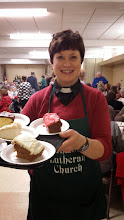
- I'm a proud 2011 graduate of Lutheran Theological Seminary at Gettysburg and the Pastor of Christ Lutheran Church continuing the journey that God has planned. This is where I somewhat regularly contemplate the intersection of faith and the real world, and the tension between law and the Gospel. I am blessed with a wonderful husband, two Lutheran Chicks and Toby, our beagle/pointer mix! And now for the legal lingo:Views expressed here are mine alone, and do not represent the ELCA, LTSG, or any ministry context in which I serve or to which I belong. The names in my stories have been changed to protect the innocent, as have key facts. If the story sounds familiar perhaps it is because life experiences can be universal.
Friday, January 29, 2010


Friday, January 8, 2010
The Power of Prayer and Life in the Spirit
Those of us on internship have a schedule of rotating responsibility for offering a weekly devotion. Here is some thoughts I have been having that could just as easily apply to anyone in ministry, lay or rostered and gratitude for Brian Stoffregen for getting me going on the prayer and ministry theme at Crossmarks.
• As I contemplated the devotion I wanted to share, I was inspired by our lectionary as we celebrate the Sunday of the Baptism of Our Lord. (Luke 3.15-17, 21-22; Isaiah 43-1-7; Acts 8:14-17).
As we read the words of the Gospel of Luke, we hear that it is while Jesus was praying that the Holy Spirit descends. Prayer is greatly emphasized in the Gospel of Luke. In all of the following events taken by Luke from Mark, Luke adds the fact that Jesus was praying! After Jesus’ baptism and inauguration of his ministry, there is the cleansing of a leper, followed by Jesus withdrawing to pray. Have there been times you’ve been at the hospital, or with a person in crisis, or mourning and at the end of it find yourself in prayer both for those involved and for the recharging of your own battery? I have.
A theme throughout the moments of Jesus’ ministry looks like this: Before selecting the twelve, Jesus prays; before the disciples question him, Jesus was praying; before the transfiguration, Jesus is praying. Luke emphasizes that it is Jesus' praying that motivated the disciples to ask Jesus to teach them to pray. Jesus gives them the Lord's Prayer. Only in Luke does Jesus tell the parable about the need to pray always and not to lose heart. How many times have we been confronted by challenging people or decisions, times of trying to balance needs? Surely the phrase, “the power of prayer” is more than just a great cliché.
The power of prayer is about more than prayer’s effectiveness or our ability to speak prayers. More importantly, the power of prayer is about the power source in the midst of our times of praying. The power of the Advocate, the Spirit. In our lesson from Acts 8:14-17, Peter and John went to the baptized believers in Samaria and prayed for them that they might receive the Holy Spirit, laid hands upon them and they did. For the baptized believers, we see prayer and God’s empowerment in the Spirit.
Our schedules are full, our lives are busy, sorting out the demands can take much of our energy. So how will we do all we are called to do? By remembering to take our cue, being constant in turning to God in prayer, believing that our prayers are more than speeches or lists of demands to God, but times when we are drawn again into the power and movement of the Spirit. I am reminded of the four steps of prayer: We talk; God listens; God talks; We listen. Prayer in the Spirit is a dialogue. And as we see in Acts, prayer in the Spirit happens not in isolation, but in community. Prayer is where we can hear that the question is not “How will I do this?” but the place we can seek where God is working in our midst.
As I have listened to the many stories shared about our time on internship, I know there a many times each of us has asked for prayer and times we have seen God at work. I know for each of us there are many more stories beyond that- for each of you, I pray for all of the times we all need prayer:
when we walk in the midst of important moments in the lives of those whom we shepherd,
when we have important decisions to make, for clarity to make them,
when we find ourselves with those in the greatest needs of body, mind and spirit, especially when they challenge our ability to remain with them,
when we need to know whether to speak or to be still and listen,
when we are told to do something way beyond our comfort zone,
when we need strength for times we lose heart, or face questions, even our own,
when we are uninspired and are facing that newsletter article, sermon, meeting, _______.
when we feel isolated,
when we are trying to see God’s activity in events that confound us,
when we are balancing our ministry and our loved ones.
I am sure there are other things to add to this list.
Whatever these times have been or are, for you, as we head into the second half of our internship, and the busy pace of all that is on the horizon, may we remember the power source of our prayers, and wherever the moments take us, in the life of the Spirit hear the words of Isaiah:
Do not fear, for I have redeemed you; I have called you by name, you are mine.
When you pass through the waters, I will be with you;
and through the rivers, they shall not overwhelm you;
when you walk through fire you shall not be burned, and the flame shall not consume you. For I am the LORD your God, the Holy One of Israel, your Savior… You are precious in my sight, and honored, and I love you.
May God continue to richly bless each of you, my brothers and sisters in Christ!
• As I contemplated the devotion I wanted to share, I was inspired by our lectionary as we celebrate the Sunday of the Baptism of Our Lord. (Luke 3.15-17, 21-22; Isaiah 43-1-7; Acts 8:14-17).
As we read the words of the Gospel of Luke, we hear that it is while Jesus was praying that the Holy Spirit descends. Prayer is greatly emphasized in the Gospel of Luke. In all of the following events taken by Luke from Mark, Luke adds the fact that Jesus was praying! After Jesus’ baptism and inauguration of his ministry, there is the cleansing of a leper, followed by Jesus withdrawing to pray. Have there been times you’ve been at the hospital, or with a person in crisis, or mourning and at the end of it find yourself in prayer both for those involved and for the recharging of your own battery? I have.
A theme throughout the moments of Jesus’ ministry looks like this: Before selecting the twelve, Jesus prays; before the disciples question him, Jesus was praying; before the transfiguration, Jesus is praying. Luke emphasizes that it is Jesus' praying that motivated the disciples to ask Jesus to teach them to pray. Jesus gives them the Lord's Prayer. Only in Luke does Jesus tell the parable about the need to pray always and not to lose heart. How many times have we been confronted by challenging people or decisions, times of trying to balance needs? Surely the phrase, “the power of prayer” is more than just a great cliché.
The power of prayer is about more than prayer’s effectiveness or our ability to speak prayers. More importantly, the power of prayer is about the power source in the midst of our times of praying. The power of the Advocate, the Spirit. In our lesson from Acts 8:14-17, Peter and John went to the baptized believers in Samaria and prayed for them that they might receive the Holy Spirit, laid hands upon them and they did. For the baptized believers, we see prayer and God’s empowerment in the Spirit.
Our schedules are full, our lives are busy, sorting out the demands can take much of our energy. So how will we do all we are called to do? By remembering to take our cue, being constant in turning to God in prayer, believing that our prayers are more than speeches or lists of demands to God, but times when we are drawn again into the power and movement of the Spirit. I am reminded of the four steps of prayer: We talk; God listens; God talks; We listen. Prayer in the Spirit is a dialogue. And as we see in Acts, prayer in the Spirit happens not in isolation, but in community. Prayer is where we can hear that the question is not “How will I do this?” but the place we can seek where God is working in our midst.
As I have listened to the many stories shared about our time on internship, I know there a many times each of us has asked for prayer and times we have seen God at work. I know for each of us there are many more stories beyond that- for each of you, I pray for all of the times we all need prayer:
when we walk in the midst of important moments in the lives of those whom we shepherd,
when we have important decisions to make, for clarity to make them,
when we find ourselves with those in the greatest needs of body, mind and spirit, especially when they challenge our ability to remain with them,
when we need to know whether to speak or to be still and listen,
when we are told to do something way beyond our comfort zone,
when we need strength for times we lose heart, or face questions, even our own,
when we are uninspired and are facing that newsletter article, sermon, meeting, _______.
when we feel isolated,
when we are trying to see God’s activity in events that confound us,
when we are balancing our ministry and our loved ones.
I am sure there are other things to add to this list.
Whatever these times have been or are, for you, as we head into the second half of our internship, and the busy pace of all that is on the horizon, may we remember the power source of our prayers, and wherever the moments take us, in the life of the Spirit hear the words of Isaiah:
Do not fear, for I have redeemed you; I have called you by name, you are mine.
When you pass through the waters, I will be with you;
and through the rivers, they shall not overwhelm you;
when you walk through fire you shall not be burned, and the flame shall not consume you. For I am the LORD your God, the Holy One of Israel, your Savior… You are precious in my sight, and honored, and I love you.
May God continue to richly bless each of you, my brothers and sisters in Christ!
Wednesday, January 6, 2010
Connections

The famous writer and journalist, Andy Rooney and Harry have something in common- they shared a war. Rooney who served in World War II, chronicled his experiences in his book, My War. Drafted into service, Rooney was assigned to serve as a journalist for the GI newspaper, “Stars and Stripes.” The paper served as a way to keep all of the servicemen and women connected to the bigger picture of combat. Rooney followed along as the Allied troops re-took Europe after the Normandy invasion.
It is entirely possible he and Harry crossed paths during Harry’s service in Patton’s Fourth Armored Division Corps of Engineers. They certainly saw the same world as the troops entered Germany. Rooney wrote about the marvelous feats of the Corps of Engineers, but also in his way had a little fun. After all, humor is a necessary component for enduring what these men experienced, especially for those who had the task of being the front of the front line. A little good natured ribbing was natural along the way. It wasn’t disrespect; it was a coping skill for all that those men and women faced.
Rooney notes that the Corps of Engineers built impressive portable pontoon bridges as well as repairing arch and truss bridges. The portable pontoon bridges were exciting to cross as they swayed in the river current. The engineers were proud of their achievements and missed no opportunity to proclaim the virtues of their work. Rooney tells a story of a bridge built by the Corps across a small stream. On the approach to the bridge was a sign in large hand-printed letters that read something like this” YOU ARE CROSSING THIS STREAM COURTESY OF THE 342ND ENGINEERING CORPS. THIS BRIDGE WAS BUILT IN LESS THAN 72 HOURS UNDER HEAVY ARTILLERY FIRE AND IT ALLOWED TROOPS TO ADVANCE DEEP INTO GERMANY.”
The British Corps of Engineers took great delight in poking fun of the boasting of the Americans. About a mile or so down the road, in British territory was a bridge of a similar quality over the same winding stream, and the Brits erected a sign as well. Their sign read “THERE IS NOTHING REMARKABLE ABOUT THIS BRIDGE.” But of course the bridge was remarkable- all of the bridges were remarkable as was the work and bravery of the men.
In one sense Harry was perhaps like the British soldiers, in that he wasn’t the proud type to call attention to himself. That was not his way. But he too has a bridge story, one for which he received commendation. As Harry’s unit was moving through territory, they came to a bridge heavily rigged with landmines. It appeared at first that the bridge could not be crossed. This would mean delay as the old bridge would be taken down and a new one built. Troops might even become separated. But as Harry eyeballed the bridge, he was convinced it could be safely crossed. The response of his commander? “Prove it!” And so Harry by himself made his way across by himself-safely. And the troops then moved forward. Because of his expertise, time was saved and the troops were able to stay connected and move forward more quickly.
I was not fortunate enough to be blessed to know Harry, but I am blessed to have listened as some of you have shared the ways he was connected to you. If I could sum up the theme of the stories I have heard about him in one word it would be “connections.” AFTER THE WAR, Harry was a master of many skills, who worked at Armstrong where he actually secured three patents. He worked as a mailman, as a lineman for PPL, as a census taker. Always ready to help with the electrical work on your project. I wish I had him at my house recently. He was never too busy to reach out. As I thought about all he did, and how he lived, I saw that all of his work was about that word, “CONNECTIONS.”
I am not particularly electrically minded, but even from my one shop class in school, I remember that the key to electricity is the circuit, or connection in electrical work. When the circuit is connected, there is power and light and things happen. When it is broken, there is darkness and confusion. Harry, or Linny to those close to him, was all about connections. Not an outgoing man, but he was kind, steady, faithful, hard working, devoted. Once you were in his life, he held on, always maintaining that link.
• He was connected to his family-his wife of 67 years, T. Continuing to try to stay connected even as their memories failed, hers significantly. Connecting in the nursing home even when as her Alzheimer’s advanced, it was not clear she knew.
• To his daughter, S, his son-in-law, S. His grandchildren, even his in-laws with whom he and T lived for a time. To his brother B and his family. Always staying connected out of a deep love and devotion.
• Connections to friends, co-workers, neighbors, but also to people that surprised me, but maybe not you. Which leads to another war story. When Allied soldiers were moving through Germany, they were often given housing by local families. One such family in fact gave shelter to Harry and 7 of his compatriots. After the troops moved on, Harry stayed in touch. Writing to the family long after the war, and ultimately returning to visit those who were still surviving after the war- to say “thank you.” The family said he was the only one of the soldiers who did so, maintaining a connection that no one would have expected.
OUR READING TODAY FROM ROMANS IS ALL ABOUT CONNECTIONS TOO. The apostle Paul, was a man who remained a faithful witness in the face of adversity-travel far away, risk, even prison. More importantly a witness to a commitment to connections-reminding those he connected with of God’s commitment- COMMITMENT TO AN UNBREAKABLE CONNECTION. Listen again to how strong that connection is-
• neither death, nor life, nor angels, nor rulers, nor things present, nor things to come, nor powers, nor height, nor depth, nor anything else in all creation can break God's connection-that’s pretty powerful.
I can imagine these words as God’s words to a soldier in the shock of war, in the trenches of life.
AND in the life events and trenches you have faced and face now that perhaps have seem just as overpowering. In the face of all of these things, I proclaim to you this day God’s words of hope for us today.
In the midst of sorrow and loss at Harry’s death, we hear our hope. We heard it at the beginning of the service in the words of our Thanksgiving for Baptism, also from Romans, chapter 6- Words that remind us that we have the promise of sharing with Christ, not just in death, but in life, through our baptism. One end of the connection. Then in the beginning of Chapter 8, Paul tells us that this baptism means we are adopted as God’s children- WE have hope while we wait. We are told that when what we face seems too much to bear, when we can’t find the words to pray anymore, the Spirit keeps the connection flowing- praying for us, praying with us, knowing our hearts. When we sigh, God sighs; when we cry, God cries.
And then we hear that through our baptism and Christ’s death and resurrection, the two ends of the circuit are closed, are connected. WE ARE CONNECTED to the promise- God’s promise that death does not have the last word. Though we feel in our loss, like there is a break in the connection, we can rest assured that God is still connected to each of us. God’s claimed Harry and each of us in baptism. Claimed us, saved us and assures us that there will be more to the story- from a God that keeps his promises. A God that says, "In difficult days I will be with you. You can count on this. I will be your refuge and your strength. I will be there in times of trouble to carry you through."
“I promise to never, ever stop loving each of you.” God will never give up on us. May this help you to live in the confidence that no matter what has happened or will happen, God’s promise and presence are NEVER GONE- NEVER SEPARATED from us.
At the end of World War II, Winston Churchill was at a dinner and a man stood up and said, "At the Battle of the Bulge we had evidence that the British soldiers were braver than the Nazi soldiers. The Battle of the Bulge proved that." When Churchill got up to speak, he said, "That's not true. The Nazi soldiers were just as brave as the British soldiers. But the British soldiers were brave for five minutes longer."
Brothers and Sisters, we know what it feels like to wonder if we can hold on even five minutes longer. But when it all looks bleak or dark, hang on to this hope! The list of overwhelming things Paul shares are designed to remind us that there is nothing too big for God’s power, and nothing that will break God’s connection of love for us, and the promise it brings.
Live in the confidence that the God who gave his Son Jesus on the cross will not break that connection. He'll be there-to carry you, to give you the strength to endure, to bring good out of the negative. He will be there- in love, speaking again and again to you, that for you, for me, for Harry,
NOTHING can separate us from the love of God which is in Christ Jesus our Lord, now and unto eternal life.
Thanks be to God!
Monday, January 4, 2010
Bringing Down the Wall
This was the week when God brought down a wall. It all started ten years ago. She had been the caregiver for his wife, and there was the constant strain and struggle as his wife's health and mind were rapidly unraveling. His family lived many hours away. Though it was hard for them to be such a distance away, to be unable to pick up and move, the caregiver began to build a grudge, that nagged at her- she felt she shouldered the load, and that she was better to his wife than anyone else. After all she cleaned her up, watched as the pureed food came right back, dealt with the many ways and times that a body failed to function as it once had. And the grudge grew.
But so did her love for the man. They shared so much together in this small and confining world. After his wife died, the man was lonely- he turned to the woman he knew now so well. The caregiver and the husband married.
Maybe it was too soon. Maybe the family was still too deep in grief, magnified by the fact they knew they could not be as present and involved in the last weeks of their mother's life. As it had gotten closer to the wife's death the grudge had grown in both directions. In fact it was now a wall.
Maybe things were said and things were done. Maybe perceptions got the best of them. Maybe there was a whole lot more emotion then that we cannot see today. But while some of the memories dissipated, the wall of the grudge still loomed large.
And the wall was well tended.
But when the marriage of the caregiver and the man happened, his family didn't come. Now the wall was fortified by allegations of bad behavior and arguments over money and property and who cared more.
And the wall became a fortress, well defended. Any effort to change the way things were was met with defensive moves and threats. Eventually the man's daughter, now older and wiser, saw that this way of living was starving out her relationship with her father.
But nothing changed until the man became ill, and the illness got worse, and more complicated. The caregiver/wife knew in her heart it was wrong to keep the man and daughter apart. But every time she thought about it, all those hurts of the past came hurtling down. She got mad all over again, for herself and for him.
The only conversation she could imagine was one that gave the chance she had never had to speak her mind and have the last word, to exact her pound of flesh and vengeance first.
But then the man became gravely ill and suddenly all that fortress living felt like isolation and solitary confinement. Now which was more important, honor or tying up loose ends?
Was forgiveness possible? She knew his daughter should see him, just in case, God forbid...
How much we want forgiveness for ourselves. How hard it is to forgive others. How much we desire that God loves us enough to forgive us, but can we see that God loves others that much too? If it was up to us, we know how the story would end. We can't love enough to forgive through the pain.
She always loved the Lord's Prayer and she knew the part about "forgive us our sins." And the second part about "as we forgive others" though she admitted that she might race through that part a little faster.
But what about those words that come next? "Lead us not into temptation"? How do we hear those words if the temptation is the temptation to not forgive, to hold that grudge, to keep building that wall and defending that fortress? And what if the thing we need forgiven for is our inability to forgive?
As we talked about this, and about God's will to be done, our prayer become one of asking God to change her heart so that she could do what God would want. By herself, she could not. With God, for God, maybe, just maybe...
She took the hard step of calling the daughter, who said she would come. It wasn't easy and in fact she did not hold her tongue like she promised, but still, it was a step.
She wanted the daughter to come to the church, but since her husband could not travel, she had to take a harder step- to invite the daughter into her home.
In the couple of days that passed, she ranted, and railed, and cried and wanted so desperately to recant the whole thing. Temptation again.
The day came and the daughter was coming after lunch. But that morning her husband fell and she could not move him. He was not injured, but was stuck on the floor. She called the church with two thoughts- help me and "this means the daughter cannot come."
We got the man up and into a chair, we prayed and said thanks for it. And instead of temptation to call the whole thing off, talked about how this made it even more important.
And the daughter came, and the man smiled the most beautiful electric smile. And they held hands. He in his recliner, and her on the floor next to him, holding hands and smiling through tears. For a moment, he was not elderly and frail and she was not middle aged. It could have been her as a little girl with her Dad. Words were not really necessary between them and the wall began to melt.
We shared communion. God's message of love, forgiveness and community. With a cross on the table in our midst.
Then the caregiver/wife/now caregiver again announced she needed to speak- she had something she needed to say. Silence. What would it be? Would the warmth of the moment end? I stroked her on the back, and said a silent prayer. She began to say that she was hurt by three events, which she listed. Silent pause. Then she drew a deep breath and said that those things were in the past and she forgave the daughter and her family. With tears and a visible combination of relief and amazement that came across her. And big chunks of the wall came crashing down. Then the daughter said thanks and acknowledged that perhaps things were misunderstood, but it was never her intention to hurt the woman and she was sorry for whatever pain there had been. More tears and relief.And the last of the rubble of the wall was cleared away.
And in the midst of the room with the cross in the middle, the work of the cross was accomplished once more. Now people could see the path between them, that they wanted and needed. While there are still potholes to repair and cleanup work to do, the way is clear for them to share what they have been missing before it is too late.
It takes more work to defend the wall, but it takes greater energy to risk believing it isn't needed. To trust in something bigger, in someone bigger.
To let go of the temptation to do otherwise.
A sacred moment happened that will stay with each of us for the rest of our lives.
I read recently a New Year's message about resolutions. The author talked about how resolutions are things we make in faith, or at least hope. He wrote that Christ's incarnation was God making a leap of faith into our world and asked if we were ready to make a leap of faith toward someone else? This is exactly what the caregiver did. Is there a wall that you are tending? A road between you and someone else that is closed off? If so, may you bring that situation to God in prayer, prayer that God might make the path clear, might give you the strength to begin to take the steps, might give you persistence for the journey, and might lead you away from the temptation to do otherwise.
But so did her love for the man. They shared so much together in this small and confining world. After his wife died, the man was lonely- he turned to the woman he knew now so well. The caregiver and the husband married.
Maybe it was too soon. Maybe the family was still too deep in grief, magnified by the fact they knew they could not be as present and involved in the last weeks of their mother's life. As it had gotten closer to the wife's death the grudge had grown in both directions. In fact it was now a wall.
Maybe things were said and things were done. Maybe perceptions got the best of them. Maybe there was a whole lot more emotion then that we cannot see today. But while some of the memories dissipated, the wall of the grudge still loomed large.
And the wall was well tended.
But when the marriage of the caregiver and the man happened, his family didn't come. Now the wall was fortified by allegations of bad behavior and arguments over money and property and who cared more.
And the wall became a fortress, well defended. Any effort to change the way things were was met with defensive moves and threats. Eventually the man's daughter, now older and wiser, saw that this way of living was starving out her relationship with her father.
But nothing changed until the man became ill, and the illness got worse, and more complicated. The caregiver/wife knew in her heart it was wrong to keep the man and daughter apart. But every time she thought about it, all those hurts of the past came hurtling down. She got mad all over again, for herself and for him.
The only conversation she could imagine was one that gave the chance she had never had to speak her mind and have the last word, to exact her pound of flesh and vengeance first.
But then the man became gravely ill and suddenly all that fortress living felt like isolation and solitary confinement. Now which was more important, honor or tying up loose ends?
Was forgiveness possible? She knew his daughter should see him, just in case, God forbid...
How much we want forgiveness for ourselves. How hard it is to forgive others. How much we desire that God loves us enough to forgive us, but can we see that God loves others that much too? If it was up to us, we know how the story would end. We can't love enough to forgive through the pain.
She always loved the Lord's Prayer and she knew the part about "forgive us our sins." And the second part about "as we forgive others" though she admitted that she might race through that part a little faster.
But what about those words that come next? "Lead us not into temptation"? How do we hear those words if the temptation is the temptation to not forgive, to hold that grudge, to keep building that wall and defending that fortress? And what if the thing we need forgiven for is our inability to forgive?
As we talked about this, and about God's will to be done, our prayer become one of asking God to change her heart so that she could do what God would want. By herself, she could not. With God, for God, maybe, just maybe...
She took the hard step of calling the daughter, who said she would come. It wasn't easy and in fact she did not hold her tongue like she promised, but still, it was a step.
She wanted the daughter to come to the church, but since her husband could not travel, she had to take a harder step- to invite the daughter into her home.
In the couple of days that passed, she ranted, and railed, and cried and wanted so desperately to recant the whole thing. Temptation again.
The day came and the daughter was coming after lunch. But that morning her husband fell and she could not move him. He was not injured, but was stuck on the floor. She called the church with two thoughts- help me and "this means the daughter cannot come."
We got the man up and into a chair, we prayed and said thanks for it. And instead of temptation to call the whole thing off, talked about how this made it even more important.
And the daughter came, and the man smiled the most beautiful electric smile. And they held hands. He in his recliner, and her on the floor next to him, holding hands and smiling through tears. For a moment, he was not elderly and frail and she was not middle aged. It could have been her as a little girl with her Dad. Words were not really necessary between them and the wall began to melt.
We shared communion. God's message of love, forgiveness and community. With a cross on the table in our midst.
Then the caregiver/wife/now caregiver again announced she needed to speak- she had something she needed to say. Silence. What would it be? Would the warmth of the moment end? I stroked her on the back, and said a silent prayer. She began to say that she was hurt by three events, which she listed. Silent pause. Then she drew a deep breath and said that those things were in the past and she forgave the daughter and her family. With tears and a visible combination of relief and amazement that came across her. And big chunks of the wall came crashing down. Then the daughter said thanks and acknowledged that perhaps things were misunderstood, but it was never her intention to hurt the woman and she was sorry for whatever pain there had been. More tears and relief.And the last of the rubble of the wall was cleared away.
And in the midst of the room with the cross in the middle, the work of the cross was accomplished once more. Now people could see the path between them, that they wanted and needed. While there are still potholes to repair and cleanup work to do, the way is clear for them to share what they have been missing before it is too late.
It takes more work to defend the wall, but it takes greater energy to risk believing it isn't needed. To trust in something bigger, in someone bigger.
To let go of the temptation to do otherwise.
A sacred moment happened that will stay with each of us for the rest of our lives.
I read recently a New Year's message about resolutions. The author talked about how resolutions are things we make in faith, or at least hope. He wrote that Christ's incarnation was God making a leap of faith into our world and asked if we were ready to make a leap of faith toward someone else? This is exactly what the caregiver did. Is there a wall that you are tending? A road between you and someone else that is closed off? If so, may you bring that situation to God in prayer, prayer that God might make the path clear, might give you the strength to begin to take the steps, might give you persistence for the journey, and might lead you away from the temptation to do otherwise.
Thursday, December 24, 2009
Nativity
Christus natus est! In a few hours there will be much rejoicing and singing and ringing and gathering. In less than an hour across the pond the annual Lessons and Carols from Kings College Cambridge will begin as it always does with a solo voice singing the opening lines of "Once in Royal David's City." Candles and pageantry and finery will abound. While we luxuriate in that, underneath it all let us remember the simplicity of the truth of the incarnation of the Word into our midst.
We weren't expecting you.
Clueless. Doubting.
Downright rude.
It's a wonder that you stayed.
Thank God you did.
Thank God you came.
Thanks be to God we have never been the same.
(on the tag of my Nativity pin from Deidre, a jewelery maker in Minneapolis).
We weren't expecting you.
Clueless. Doubting.
Downright rude.
It's a wonder that you stayed.
Thank God you did.
Thank God you came.
Thanks be to God we have never been the same.
(on the tag of my Nativity pin from Deidre, a jewelery maker in Minneapolis).
Saturday, December 12, 2009
More Than Changing Clothes
I gave away my favorite coat- the warmest one, the one that has traveled to Russia in winter, the one that refuses to wear out. Every year when there is a call for coats for the homeless, I have looked at the coat and passed it by. I rarely wear it, but the sentimentality of it has made me hold onto it like a prize that I just can’t part with. So I give away other things and this year I was piling up other coats and hats and things that are easier to part with. What if Christ was going to wear that coat? Which would you part with?
A couple weeks ago there was a drive to stock the food bank. And many people supported it. It is wonderful that people do in fact buy food to give, but I noticed that the food we keep is the good stuff and the food we share is the store brand. Stores ran specials just for that purpose. But rather than buy the amount of the store brand that equals the good stuff, do we just feel good that we filled the list and have more money left because we were thrifty? “Guess who’s coming to dinner?” If the answer was Christ, what would we serve and how would we prepare?
In all of the preparations of this holiday season we treat ourselves with special foods and outfits and things. Do we ever wake up one day and decide to treat the homeless? Do we find ourselves holding onto the better things in the belief that “they won’t take care of them?” Are we just looking for an excuse to not live into a deeper understanding of what John says in answer to the people who ask, “What then shall we do?”
We are called to do more than just change clothes when we hear, "If you have two coats, give one away." What if we looked at the math of this- giving away one of two is giving away half. Not giving away one of my many, giving deeply. John even addresses those who have to eke out a living under adverse even hostile conditions- tax collectors, soldiers. Live within what is honest and has integrity. Live without striving to constantly have more. Live into the reality that God’s breaking into our midst is life changing to the core.
Radical talk to suggest that we can repent, can turn away from the world’s reality and live in the “enough” of God. That we can believe in God more than ourselves. Radical talk it would be to speak of stewardship two weeks before Christmas. Proof of that when I asked my Friday Bible study group how people would react if I preached on stewardship this close to Christmas. What if we bought all the presents for everyone and then gave away half? What if instead of buying all the presents we took half the money and used it for what our brothers and sisters without enough really need?
I already had a good sized pile of things to share, but I came back to that coat. Because as easy as it is to decide to give away what might otherwise be chaff to me might be a good start if I had never given anyone anything, to stay in that place is like changing my coat and not what is inside. It suggests that I am still hedging my bets about God’s reality and providing. Christ is coming to put everything in its proper place- in the waiting of now, the proper place for the warmest most durable coat, with all the pockets and the hood that kept me warm at the Arctic Circle is on the person who would shiver in the cold without it.
A couple weeks ago there was a drive to stock the food bank. And many people supported it. It is wonderful that people do in fact buy food to give, but I noticed that the food we keep is the good stuff and the food we share is the store brand. Stores ran specials just for that purpose. But rather than buy the amount of the store brand that equals the good stuff, do we just feel good that we filled the list and have more money left because we were thrifty? “Guess who’s coming to dinner?” If the answer was Christ, what would we serve and how would we prepare?
In all of the preparations of this holiday season we treat ourselves with special foods and outfits and things. Do we ever wake up one day and decide to treat the homeless? Do we find ourselves holding onto the better things in the belief that “they won’t take care of them?” Are we just looking for an excuse to not live into a deeper understanding of what John says in answer to the people who ask, “What then shall we do?”
We are called to do more than just change clothes when we hear, "If you have two coats, give one away." What if we looked at the math of this- giving away one of two is giving away half. Not giving away one of my many, giving deeply. John even addresses those who have to eke out a living under adverse even hostile conditions- tax collectors, soldiers. Live within what is honest and has integrity. Live without striving to constantly have more. Live into the reality that God’s breaking into our midst is life changing to the core.
Radical talk to suggest that we can repent, can turn away from the world’s reality and live in the “enough” of God. That we can believe in God more than ourselves. Radical talk it would be to speak of stewardship two weeks before Christmas. Proof of that when I asked my Friday Bible study group how people would react if I preached on stewardship this close to Christmas. What if we bought all the presents for everyone and then gave away half? What if instead of buying all the presents we took half the money and used it for what our brothers and sisters without enough really need?
I already had a good sized pile of things to share, but I came back to that coat. Because as easy as it is to decide to give away what might otherwise be chaff to me might be a good start if I had never given anyone anything, to stay in that place is like changing my coat and not what is inside. It suggests that I am still hedging my bets about God’s reality and providing. Christ is coming to put everything in its proper place- in the waiting of now, the proper place for the warmest most durable coat, with all the pockets and the hood that kept me warm at the Arctic Circle is on the person who would shiver in the cold without it.
Tuesday, December 8, 2009
Shaking Reality, Not Just Waiting
What comes to mind when you hear the word "waiting?" When I ask this question, lots of people make a wrinkled up face or roll their eyes which I think proves my suspicion. We think of waiting as being a negative experience, of being stuck in time, or living in suspended animation with doubt, questions or uncertainty as our companions. Yet, our lives a made up of lots of waiting events- starting with our waiting to be born- the only waiting we can't remember. We wait for all kinds of things- the mail, test results, for our ride to come. At the grocery store we like to hear that there is a new line open with "No Waiting." Entire industries exist to minimize the experience of our "wait time." Perhaps one of least favorite waiting experience happens when we make a phone call and are placed "on hold." Just thinking about that can make us groan. After awhile a voice is heard, but it is not a live person, but a recording that sounds something like this-"Please continue to hold. Your call is IMPORTANT to us. Someone will be with you shortly." And then we wait some more. Eventually, this waiting with no belief becomes our reality. If I stay on that phone long enough, when a real live person actually answers, I am usually caught off guard- I got used to waiting.
Before we hear John in the wilderness announcing it is time to prepare the way, the people of Israel have been waiting. Theirs is a history of waiting- generations being born and dying waiting for the promise of Messiah. Unending waiting had become their reality. Then one day, Zechariah enters the temple, there to offer the sacrifice and prayers on behalf of the people. In the holy space where one ought to expect the divine presence. But in this reality of waiting, and faithfully going through all of the motions, appears the angel with news that God has heard his prayer. This reality is shaken. And Zechariah answers as one who has been living "on hold" and has been caught off guard. He is stunned and he questions. Unable to speak words of belief, he is struck mute and spends all of Elizabeth's pregnancy in silence. What happened in that new time of waiting?
I suggest that he had time to ponder God's words, to pray and to listen. And in this time Zechariah makes the shift from waiting in doubt to the certainty of anticipation. So much so that by the time he can again speak, the words come spilling forth, unable to be contained- the words of hope and anticipation we sang in our hymn this day- "Blessed be the Lord God of Israel who has come to the people and set them free. Who has raised up for us a mighty Savior, born of the house of his servant David." Through the prophets of old we heard a promise and now that promise is coming true! What our ancestor Abraham was promised in the covenant is happening! God showing mercy, bringing light into the darkness, to those in the shadows, guiding feet into the way of peace-prayer and prophecy are becoming new reality! And he proclaims that John will now be the one who initiates these preparations for the Lord, and brings word of forgiveness of sins and repentance .
Zechariah has made the shift from waiting to anticipating. But those who hear his song, are still waiting. They walk away scratching their heads and wondering what it all means and when. And another thirty plus years will pass before we stand in the story as we do today to hear John proclaim it is time to prepare the way for the Lord.
In our world view we see waiting as passive, negative. But in the Gospel, waiting is active. Preparing the way, filling valleys, making mountains and hills lower, smoothing out rough ways. Not just sitting still, but removing obstacles. It is a different kind of waiting. Perhaps instead of saying we are in a season of waiting, we should proclaim we are anticipating. The difference being that anticipation is rooted in hope, is invested and lives in certainty. The reason for our certainty is that we can hear of God's ongoing activity in our history, of the fulfillment of prophecy and can live not as people "on hold" but as a people certain that God HAS answered. We are in the middle of God's salvation history. Or as one writer suggests perhaps more accurately we are in the middle of the drama of God's stirring up. This stirring unfolding kingdom and salvation. PLAYING NOW.
And we have a role in this drama- we are on the stage carrying out God's drama. We can see in our lives the forgiveness we have received, the times when our ways have been made straight, when we have seen that light in the darkness.
Then we can think of others around us- those who are in need of this message- we don't have to look far. Down the street, in our newspaper, or on TV, we don't have to struggle to see those in need. We who anticipate also are called to participate. When we wonder how there will be peace in our world, when those in darkness can find that ray of light, when those who face obstacles can overcome them, perhaps we should hear the word of the poet June Jordan, writing about South African apartheid- "We are the ones we have been waiting for." We are the ones who continue the work of meeting people in their wildernesses as messengers.
I once heard a sermon by one of the professors at seminary who talked about this notion of God's work in the world. He said something like this-" When you are on the way to do the thing you think you are supposed to do, are called to do, someone will cross your path and in that moment real ministry will happen." People will enter our midst and how we respond prepares God's way- even one more step. I want to share a story with you about how I saw this at work recently. I accompanied our confirmation students, their parents, and members of the Community Outreach Ministry to serve dinner at the Crispus Attucks Center on a Saturday night here in the city. We were there primarily to bring and serve food to those in need.
There were more people than usual- over 150 people in the line. We served the food, but also tried to say "hello" to those coming through. Some said "hi" back, others ignored us, some wanted to tell us what they wanted to eat. One man came through the line looking especially downhearted. One of group became aware of this and caught his eye, and said, " Hi! How are you tonite?" His face crinkled into a smile and he said, "Great!" How could this person who in all likelihood had no permanent home, for whom this meal may be the only one today, be great? When we asked why he was great, here is what he said, " Because you asked me how I am, and I thought no one cared."
We went to serve food but God had more in mind. A moment of proclaiming God's love and care. And in that moment, valleys were made less deep, mountains less tall, and rough ways a little less challenging. We celebrate Christ's birth into our midst- a new reality of salvation happening here. We both recall this birth and look forward to the future fulfillment. May we do so not as people who are just waiting but as people stirred up and bursting with anticipation to share.
Before we hear John in the wilderness announcing it is time to prepare the way, the people of Israel have been waiting. Theirs is a history of waiting- generations being born and dying waiting for the promise of Messiah. Unending waiting had become their reality. Then one day, Zechariah enters the temple, there to offer the sacrifice and prayers on behalf of the people. In the holy space where one ought to expect the divine presence. But in this reality of waiting, and faithfully going through all of the motions, appears the angel with news that God has heard his prayer. This reality is shaken. And Zechariah answers as one who has been living "on hold" and has been caught off guard. He is stunned and he questions. Unable to speak words of belief, he is struck mute and spends all of Elizabeth's pregnancy in silence. What happened in that new time of waiting?
I suggest that he had time to ponder God's words, to pray and to listen. And in this time Zechariah makes the shift from waiting in doubt to the certainty of anticipation. So much so that by the time he can again speak, the words come spilling forth, unable to be contained- the words of hope and anticipation we sang in our hymn this day- "Blessed be the Lord God of Israel who has come to the people and set them free. Who has raised up for us a mighty Savior, born of the house of his servant David." Through the prophets of old we heard a promise and now that promise is coming true! What our ancestor Abraham was promised in the covenant is happening! God showing mercy, bringing light into the darkness, to those in the shadows, guiding feet into the way of peace-prayer and prophecy are becoming new reality! And he proclaims that John will now be the one who initiates these preparations for the Lord, and brings word of forgiveness of sins and repentance .
Zechariah has made the shift from waiting to anticipating. But those who hear his song, are still waiting. They walk away scratching their heads and wondering what it all means and when. And another thirty plus years will pass before we stand in the story as we do today to hear John proclaim it is time to prepare the way for the Lord.
In our world view we see waiting as passive, negative. But in the Gospel, waiting is active. Preparing the way, filling valleys, making mountains and hills lower, smoothing out rough ways. Not just sitting still, but removing obstacles. It is a different kind of waiting. Perhaps instead of saying we are in a season of waiting, we should proclaim we are anticipating. The difference being that anticipation is rooted in hope, is invested and lives in certainty. The reason for our certainty is that we can hear of God's ongoing activity in our history, of the fulfillment of prophecy and can live not as people "on hold" but as a people certain that God HAS answered. We are in the middle of God's salvation history. Or as one writer suggests perhaps more accurately we are in the middle of the drama of God's stirring up. This stirring unfolding kingdom and salvation. PLAYING NOW.
And we have a role in this drama- we are on the stage carrying out God's drama. We can see in our lives the forgiveness we have received, the times when our ways have been made straight, when we have seen that light in the darkness.
Then we can think of others around us- those who are in need of this message- we don't have to look far. Down the street, in our newspaper, or on TV, we don't have to struggle to see those in need. We who anticipate also are called to participate. When we wonder how there will be peace in our world, when those in darkness can find that ray of light, when those who face obstacles can overcome them, perhaps we should hear the word of the poet June Jordan, writing about South African apartheid- "We are the ones we have been waiting for." We are the ones who continue the work of meeting people in their wildernesses as messengers.
I once heard a sermon by one of the professors at seminary who talked about this notion of God's work in the world. He said something like this-" When you are on the way to do the thing you think you are supposed to do, are called to do, someone will cross your path and in that moment real ministry will happen." People will enter our midst and how we respond prepares God's way- even one more step. I want to share a story with you about how I saw this at work recently. I accompanied our confirmation students, their parents, and members of the Community Outreach Ministry to serve dinner at the Crispus Attucks Center on a Saturday night here in the city. We were there primarily to bring and serve food to those in need.
There were more people than usual- over 150 people in the line. We served the food, but also tried to say "hello" to those coming through. Some said "hi" back, others ignored us, some wanted to tell us what they wanted to eat. One man came through the line looking especially downhearted. One of group became aware of this and caught his eye, and said, " Hi! How are you tonite?" His face crinkled into a smile and he said, "Great!" How could this person who in all likelihood had no permanent home, for whom this meal may be the only one today, be great? When we asked why he was great, here is what he said, " Because you asked me how I am, and I thought no one cared."
We went to serve food but God had more in mind. A moment of proclaiming God's love and care. And in that moment, valleys were made less deep, mountains less tall, and rough ways a little less challenging. We celebrate Christ's birth into our midst- a new reality of salvation happening here. We both recall this birth and look forward to the future fulfillment. May we do so not as people who are just waiting but as people stirred up and bursting with anticipation to share.
Subscribe to:
Posts (Atom)